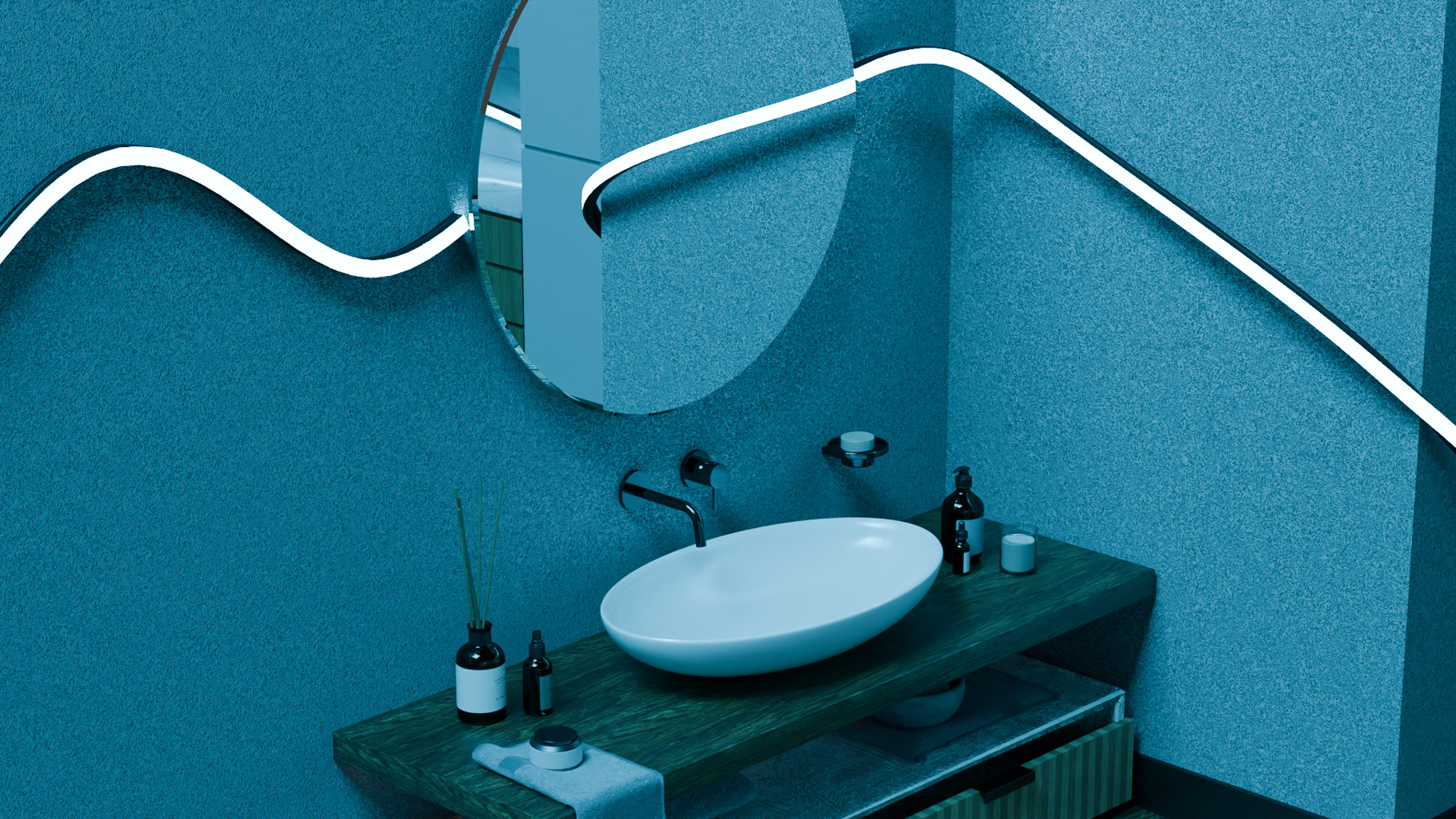
Supa Strip: 3‑Side Neon CS8812 RGBW Lightstrip
Supa Strip is our flagship 3-side neon tube CS8812 RGBW 4000K lightstrip, built for makers, installers, and designers who want a professional neon look without giving up the flexibility of individually addressable LEDs.
Available in 2M and 5M runs with 144 LEDs per meter, Supa Strip is tuned for ultra-smooth diffusion, clean neutral white, and reliable 12V power planning. It pairs perfectly with WLED on ESP32, 12V 20A/40A power supplies, and our Aura Strips at 96 LEDs/m when you want to mix densities across a build.
In this article we’ll cover:
- What makes Supa Strip special as a 3-side neon CS8812 RGBW 4000K lightstrip
- How 144 LEDs/m behaves in real builds (and how it compares to Aura at 96 LEDs/m)
- Power and wiring considerations for 2M vs 5M runs
- When to choose Supa Strip vs Aura Strip in the same project
Key Takeaways
- Supa Strip = 3-side neon + CS8812 RGBW 4000K + 144 LEDs/m, in 2M or 5M lengths.
- The 3-side neon profile gives you a bright, continuous line of light visible from the front and both sides.
- 144 LEDs/m offers extremely smooth diffusion and fine animation detail, especially for logos and outlines.
- The 4000K white channel delivers clean, neutral white that doubles as practical lighting.
- Supa Strip is ideal for premium visible runs, while Aura Strips (96 LEDs/m) are great for longer, more power-efficient runs or behind diffusers.
Always follow local electrical codes. If you’re unsure about mains-voltage wiring, consult a qualified electrician.
What is Supa Strip?
Supa Strip is a 12V CS8812-based RGBW LED strip pre-mounted in a 3-side neon diffuser. Instead of a bare LED strip and separate channel, you get a ready-to-install neon tube that combines:
- Individually addressable CS8812 pixels
- RGBW package with 4000K white
- 144 LEDs per meter density
- A 3-side neon silicone profile that emits light from the front and two sides
It’s available in two practical lengths:
- 2M Supa Strip – perfect for logos, short accents, and compact pieces
- 5M Supa Strip – designed for room-scale and architectural runs
Because it’s built around a 12V architecture, Supa Strip:
- Works well with longer power runs than typical 5V addressable strips
- Plays nicely with 12V 20A and 40A power supplies
- Is easier to design around for bigger projects where current and voltage drop matter
Why 3‑Side Neon Matters
Most LED strips are designed to fire light straight up, and any neon effect is an afterthought—a strip shoved in a silicone tube. Supa Strip’s 3-side neon form factor is designed for exactly this kind of build from the start.
What “3-side neon” actually means
- The front face of the tube glows like a traditional neon tube.
- The left and right sides emit light as well, giving you a thick, continuous bar of light instead of a flat edge.
- From typical viewing angles, you see solid neon, not individual LED points.
This is especially powerful when you:
- Outline walls, bars, or ceilings where the strip is visible from multiple angles
- Build signs or logos that need to look good from a distance and up close
- Run strips along furniture edges, steps, or set pieces where viewers can see the sides
Supa Strip’s 144 LEDs/m density and carefully chosen LED-to-diffuser spacing are tuned specifically so you get that “continuous glass neon” look in a flexible, low-voltage package.
CS8812 RGBW with 4000K: Why the White Channel Matters
Supa Strip uses CS8812 addressable RGBW LEDs with a dedicated 4000K white channel. That gives you:
- Neutral white that doesn’t skew too warm or too blue
- Clean, usable light for task lighting, accent lighting, and video
- More natural pastel colors when you mix RGB + W instead of faking white with RGB alone
Compared to classic RGB strips, Supa Strip’s RGBW layout means:
- White text, highlights, and “off” scenes look crisp and neutral, not greenish or purple
- You can run the strip at lower RGB levels while using the white channel for brightness, which often looks more natural
In a room or bar install, that means Supa Strip can go from full neon party mode to relaxed neutral accent light without looking cheap or muddy.
144 LEDs/m vs 96 LEDs/m: Supa Strip vs Aura
We also offer Aura Strips at 96 LEDs per meter. These are ideal when you want high density without going all the way to 144 LEDs/m, or when you’re not using a 3-side neon tube.
Here’s how Supa Strip (144 LEDs/m) compares to Aura Strip (96 LEDs/m) in practical terms:
| Feature | Supa Strip (144 LEDs/m, 3-side neon) | Aura Strip (96 LEDs/m) |
|---|---|---|
| LED density | Very high – 144 LEDs/m | High – 96 LEDs/m |
| Diffusion | Ultra-smooth, near-continuous neon | Very smooth, especially under flat diffusers |
| Form factor | Integrated 3-side neon tube | Bare strip for channels, coves, or panels |
| White channel | RGBW 4000K | RGBW options depending on variant |
| Best viewing distance | Close-up to far – made to be directly seen | Close-up friendly, great when slightly hidden |
| Power per meter (planning) | Higher – plan for dense RGBW at 12V | Lower than Supa Strip at same brightness settings |
| Ideal use cases | Logos, outlines, visible runs, premium neon | Long runs, coves, behind diffusers, mixed installs |
When to choose Supa Strip
Use Supa Strip when:
- The strip is fully visible and you care about aesthetics up close
- You want a neon-like line of light instead of exposed diode points
- You’re doing 2M or 5M feature runs around the room, bar, or set
- You need RGBW 4000K for both eye-candy and functional white light
When to choose Aura Strip
Use Aura Strips when:
- You’re building longer runs that will be hidden in coves or channels
- You want high density but don’t need integrated neon tubing
- You’re mixing densities in the same project (e.g., Supa Strip as the hero run, Aura as supporting backlight)
Many builders will use Supa Strip for the main visible lines and Aura for indirect glow, all driven from the same WLED/ESP32 controller and 12V PSU setup.
Power Planning for 2M and 5M Supa Strip Runs
Supa Strip is dense and bright, which means real power planning matters. Exact power draw depends on your patterns and brightness, but like most 12V high-density RGBW strips, you should plan conservatively.
For planning, a common estimate for dense 12V RGBW at 144 LEDs/m is roughly:
- 20–24 W per meter at full-bright white (all channels on)
Use a safe planning number (for example, 24 W/m) unless your product datasheet gives a specific value.
2M Supa Strip Example
Assume 24 W/m for planning:
- Length: 2 m
- Power: 2 m × 24 W/m = 48 W
- Current at 12V: 48 W ÷ 12 V ≈ 4 A
A single 2M Supa Strip is easy to drive from a 12V 20A PSU, with plenty of headroom. You’ll typically:
- Feed power at one end
- Optionally inject at the far end if you’re pushing brightness or chaining multiple runs
5M Supa Strip Example
For a 5M run at the same planning number:
- Length: 5 m
- Power: 5 m × 24 W/m = 120 W
- Current at 12V: 120 W ÷ 12 V = 10 A
This is still very comfortable on a 12V 20A PSU (≈240 W), especially if you keep your continuous PSU load in the 70–80% range.
For a 5M Supa Strip, we recommend:
- Power injection at both ends for best color consistency
- Considering a mid-point injection if you chain multiple 5M runs from the same PSU
Thinking in terms of supplies
Common PSU choices:
- 12V 20A (≈240 W) – great for a few 2M or 5M Supa Strips plus some Aura runs
- 12V 40A (≈480 W) – for larger builds where you’re powering multiple neon lines and background strips
You can combine Supa Strip and Aura Strip off the same supply as long as you:
- Sum up your worst-case wattage
- Keep continuous load under about 70–80% of the PSU rating
- Fuse branches appropriately if you split the load across several runs
WLED, Segments, and Supa Strip as the Hero Line
Supa Strip is designed to be the hero line in a WLED project — the part of the install everyone notices.
Paired with an ESP32-based WLED controller, you can:
- Treat each 2M or 5M Supa Strip as a segment
- Run Aura Strips as supporting segments with softer patterns
- Use playlists and presets to swap between “full neon” and “functional white” scenes
Because Supa Strip is RGBW, you can use WLED’s white channel controls to:
- Blend in 4000K white for more natural looks
- Keep colorful animations but maintain a useful base level of neutral light
If you’re building a bar, home theater, or streaming setup, a common pattern is:
- Supa Strip: 3-side neon visible line across the bar, desk edge, or wall perimeter
- Aura Strip: uplighting behind TVs, monitors, or coves
Controlled as one logical WLED installation, everything stays in sync, but Supa Strip is the part that really pops.
Mechanical Considerations: Bend Radius and Mounting
Supa Strip’s 3-side neon body is flexible, but like any neon-style profile it has a minimum bend radius. To keep your installation reliable:
- Avoid tight corners that kink the tube or stress the internal strip
- Use gentle curves or angled joints when you need sharp turns
- Support the strip with mounting clips or channel along the run, especially in overhead or vertical installs
Treat the published bend radius for the profile as a hard limit. Over-bending can:
- Stretch solder joints
- Distort diffusion
- Shorten the life of the product
For tight logos or lettering, consider mixing shorter Supa Strip segments with connectors or carefully planned joins instead of trying to force a single piece into extreme curves.
Example Use Cases for Supa Strip + Aura
Here are a few common layouts where Supa Strip and Aura complement each other:
-
Neon Bar Edge + Back Bar Glow
- Supa Strip: 5M run along the bar front as a visible neon edge
- Aura: 96 LEDs/m runs behind bottles or shelves for a softer glow
-
Desk/Streamer Setup
- Supa Strip: 2M or 5M around the desk front or shelf as the “eye-candy line”
- Aura: behind monitors and under the desk for ambient backlight
-
Home Theater Perimeter
- Supa Strip: 5M around the room perimeter or riser steps, directly visible
- Aura: coves or behind acoustic panels for subtle, even fill light
In each case, you get a signature neon line from Supa Strip and supporting ambient light from Aura, all on one cohesive WLED-driven system.
FAQ
Is Supa Strip good for close-up viewing?
Yes. Supa Strip’s 144 LEDs/m density plus the 3-side neon diffuser are specifically tuned for close-up viewing. In most installs you won’t see individual LEDs, just a continuous neon line.
What color temperature is the white channel?
Supa Strip uses a 4000K neutral white channel. It’s balanced between warm and cool, making it usable as general accent light and a great base for mixing colors.
Can I mix Supa Strip and Aura Strip on the same power supply?
Yes, as long as you:
- Add up the total wattage for all strips
- Keep your PSU at around 70–80% of its rated power for continuous use
- Use power injection and sane wiring practices for long runs
This is a very common setup: Supa Strip as the visible neon line, Aura as the supporting background.
Do I need power injection for a 5M Supa Strip?
For best results, yes. A single feed might “work,” but injecting power at both ends of a 5M Supa Strip helps keep colors and brightness even along the entire run, especially at higher brightness levels.
What controllers work best with Supa Strip?
Supa Strip is designed with ESP32-based WLED controllers in mind. They provide:
- Easy web UI configuration
- Segmenting for multiple strips
- Presets, playlists, and optional sound-reactive modes
Any controller that supports CS8812-class addressable RGBW LEDs at 12V and proper level shifting will work, but WLED on ESP32 is the most common choice among Supa builders.
Supa Strip is what happens when you take individually addressable LEDs seriously as a design material: high density, 3-side neon diffusion, RGBW 4000K, and lengths that make sense for real-world projects. Add Aura Strips for supporting runs, and you’ve got a complete toolkit for building everything from subtle architectural accents to full-blown neon installations.