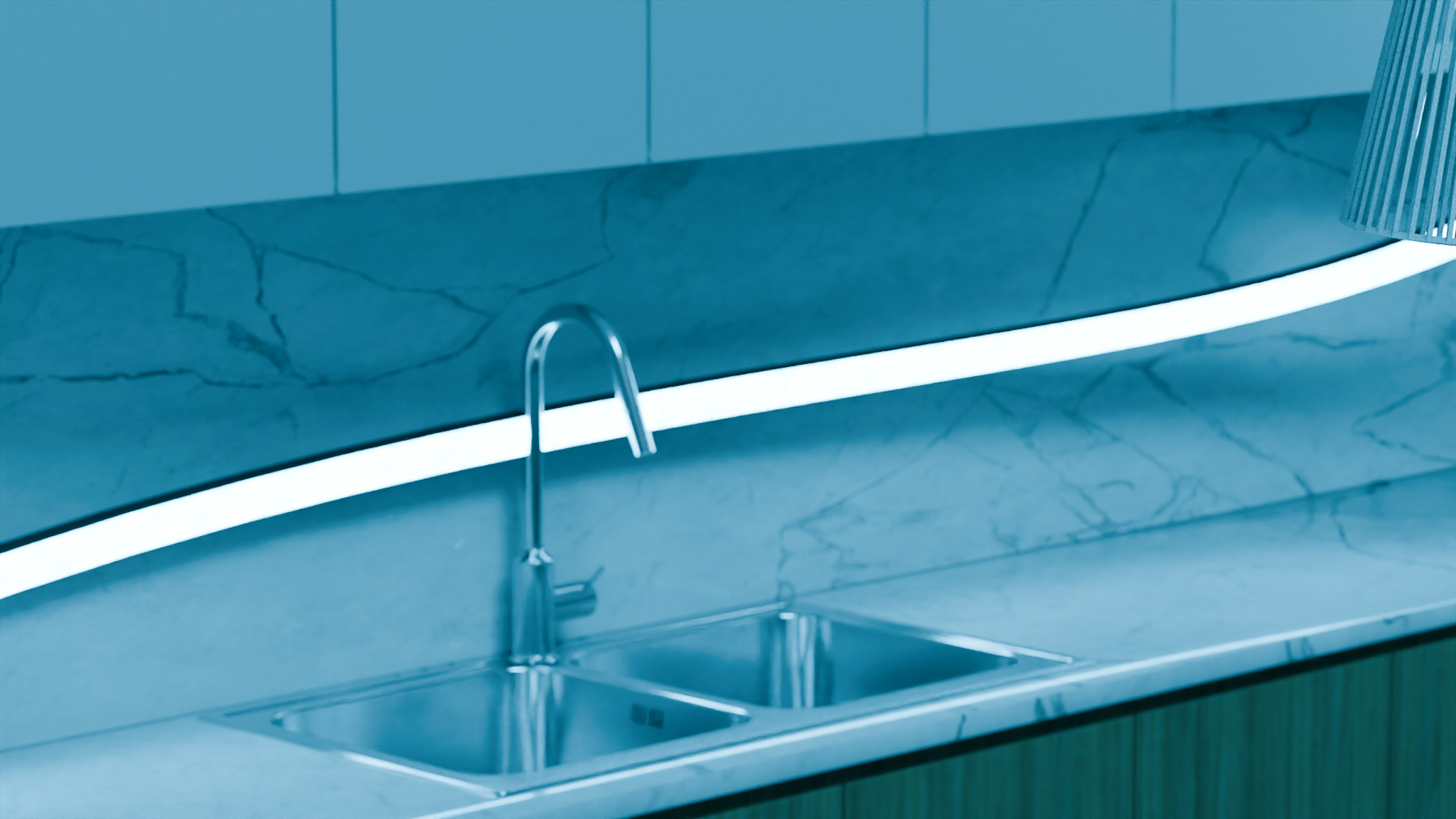
Why Supafire LED Strips Hit Different (And Why We’re Not Govee)
If you’ve shopped for RGB lights, you’ve probably seen the usual suspects: big-box smart strip kits, flashy app screenshots, bundled remotes. Brands like Govee are great at consumer-friendly starter strips — but Supafire is built for a different kind of user.
Supafire LED strips are designed for makers, integrators, and lighting nerds who care about things like LED density, diffusion quality, voltage drop, and WLED control. This article breaks down what makes Supafire lights different from most off-the-shelf kits and why that matters for your next project.
You’ll learn how we think about:
- LED density and diffusion (why 96 & 144 LEDs/m actually matter)
- 12V power architecture and real-world power planning
- 3-side neon diffusers and mechanical design
- Open, WLED-friendly control vs closed ecosystems
- Build quality decisions that aren’t obvious on a spec sheet
At a Glance: Supafire vs Typical “Smart Strip” Brands
Before we go deep, here’s the short version of how Supafire compares to most mainstream kits (including many Govee-style strips):
| Feature / Philosophy | Supafire LED strips | Typical big-box smart strip (e.g. kits like Govee) |
|---|---|---|
| Target user | Makers, builders, integrators | General consumers |
| LED density focus | High density: 96 & 144 LEDs/m options | Often 30–60 LEDs/m |
| Voltage | 12V focus for longer, cleaner runs | Mix of 5V and 12V, often not optimized for long runs |
| Ecosystem | Open: WLED / ESP32 friendly | Closed or app-locked ecosystems |
| Diffusion / neon options | Designed with 3-side neon & diffusers in mind | Generic silicone sleeves if any |
| Power planning | Encourages real power math & injection | “Plug-and-play” until it sags or browns out |
| Repair / mod friendliness | Maker-first: cut, rewire, segment freely | Integrated kits, harder to repurpose |
We’re not trying to be everything to everyone. Supafire is deliberately for the people who enjoy tuning a build, not just plugging in a strip and calling it good.
High-Density Supafire LED Strips vs Everyday RGB Kits
Density you can actually see
Most mass-market strips live in the 30–60 LEDs per meter range. That’s fine if you’re sticking a strip behind a TV where the wall does half the diffusing for you.
Supafire LED strips are built around high LED densities like 96 and 144 LEDs/m, specifically for:
- Smoother gradients in visible installs
- Less “dotting” under diffusers and neon
- Sharper text and logos in sign-style builds
- Tighter animation detail for effects and patterns
You’ll notice the difference any time the strip is:
- In a 3-side neon diffuser
- Mounted close to an exposed surface
- Used for logos, edge outlines, or architectural lines
With typical 30–60 LED/m strips, you can often identify individual emitters from across the room. With a properly driven high-density Supafire strip, you get a continuous line of light, especially once you add a diffuser.
Why we care about 12V for dense strips
A lot of budget LED strips are still 5V, especially in the individually addressable world. They’re easy to power for short lengths but hit voltage drop issues quickly.
Supafire leans hard into 12V architectures because:
- Higher voltage means lower current for the same power, which reduces losses in your wiring.
- You can run longer segments before voltage drop becomes a show-stopper.
- It plays nicely with 12V 20A and 40A power supplies that are standard in maker builds.
We still talk openly about voltage drop and power injection — we don’t pretend it doesn’t exist. If you’re stringing 5+ meters of dense RGBW together, you want a brand that acknowledges that reality.
Designed for Real Power Planning, Not Just Pretty Specs
We expect you to do the math (and we help you do it)
Supafire LED strips are designed with realistic power use in mind. We talk in terms of:
- Watts per meter (typical ranges like 14–25 W/m for dense RGBW)
- Recommended PSU sizing (e.g., running a 12V 20A or 40A supply at 70–80% load)
- Power injection points and how to plan them
Mainstream kits tend to hide power details behind statements like “don’t exceed X meters” or “use our extension kit only.” That’s fine until you want to:
- Combine multiple runs
- Put the PSU somewhere convenient
- Move beyond the one-click “scene” presets
We assume you’re planning a real installation — not just a one-strip demo.
12V 20A and 40A power supplies as first-class citizens
Supafire strips are designed to pair naturally with 12V 20A (≈240W) and 12V 40A (≈480W) power supplies. In practice that means:
- You can scale a project up with predictable behavior.
- High density LEDs are treated as a proper lighting load, not a toy.
- You can think in terms of runs, segments, and branches instead of “one strip per wall outlet.”
We also encourage leaving headroom — targeting around 70–80% of PSU capacity for continuous use. It’s better for reliability, temperature, and future expansion.
Built for 3-Side Neon Diffusers and Clean Diffusion
A lot of mainstream kits are sold naked — bare strips with maybe a soft diffuser channel. Supafire designs are heavily influenced by neon-style installs:
- 3-side neon diffusers that glow from the front and both sides
- Profiles that fit high-density strips comfortably
- Attention to minimum bend radius and mechanical support
Because we’re starting from the assumption that many users will pair strips with neon profiles, we obsess over things like:
- LED-to-diffuser distance
- Consistency across corners and curves
- How RGBW strips look when you want true white plus color
If you’re building signs, logos, or continuous light outlines, the difference between “generic strip in a tube” and a setup designed around high-density LEDs and 3-side neon is obvious the moment you flip it on.
Open Control: WLED & ESP32 Instead of Closed Apps
Brands like Govee do a solid job with polished, consumer-facing apps. Where they’re often less friendly is when you want:
- Custom integrations
- Fine control over segments
- To run everything off your own network logic or automations
Supafire leans into the open ecosystem:
- WLED on ESP32-based controllers is a first-class citizen.
- We think in terms of segments, presets, playlists, and sound-reactive modes.
- You’re free to integrate with Home Assistant, custom scripts, or your own control stack.
This isn’t about “better or worse” — it’s about different priorities:
- If you want one app, one brand, one remote: a mainstream kit might be your thing.
- If you want open, flexible, hackable control with WLED and similar tools, Supafire is built with you in mind.
Maker-First Details You Won’t See on a Retail Box
Cut points and segment flexibility
Supafire strips are chosen and configured with cutting and segmenting in mind. We expect you to:
- Cut strips to exact lengths for your project
- Feed from both ends of long pieces
- Build multi-branch layouts from a shared PSU
That means practical details like:
- Clearly marked cut points
- Reasonable pad spacing for soldering
- Layouts that work well with power injection strategies
RGBW options for cleaner whites
Where it makes sense, Supafire emphasizes RGBW strips over just RGB because:
- A separate white channel gives you cleaner whites for practical lighting.
- You can choose between warm, neutral, or cool white depending on the application.
- Color effects look better when you can mix in real white instead of faking it with RGB.
Typical consumer kits often prioritize punchy colors and eye candy. Supafire aims at installs where color and functional light both matter.
Where Supafire Makes the Most Sense (and Where It Doesn’t)
Supafire really shines when you:
- Are planning a custom build (sign, room perimeter, bar, stage, set, or art piece)
- Care about diffusion quality, not just raw brightness
- Are comfortable with (or excited about) power planning and WLED
- Want to be able to modify, repair, and expand your installation later
If you just want:
- One strip
- One app
- Zero tools or planning
…then honestly, a mainstream kit from a brand like Govee is often the simpler choice. Supafire is for the people who look at those kits and think, “Cool — now how do I make something way more customized?”
Supafire vs Govee-Style Kits: Quick Summary
| Scenario | Supafire LED strips are ideal when… | A typical Govee-style kit is fine when… |
|---|---|---|
| Room accent or TV backlight | You want custom routing, neon, and WLED control | You just want a quick splash of color |
| Neon signs, logos, and lettering | You care about high density and 3-side neon glow | You’re okay with visible dots and basic shapes |
| Whole-room or bar perimeter with long runs | You’re planning power injection, 12V, and segments | You’re installing shorter, simple runs |
| Integration with other smart hardware | You prefer open protocols and WLED/ESP32 | You’re okay with a closed app ecosystem |
| Long-term tweakability and expansion | You want to add, rewire, and extend later | You’ll set it once and forget it |
The Supafire Philosophy in One Sentence
Supafire exists for people who think of LED strips as a build material, not a disposable gadget.
If that sounds like you — if you enjoy dialing in power injection, choosing diffusers, and crafting animations in WLED — then our high-density, 12V-focused, neon-ready LED strips are built with you in mind.